In an increasingly interconnected world, the value of bilingualism cannot be overstated and will be more “important, pertinent and salient than ever before”, as addressed by Singapore Education Minister Chan Chun Sing.
Picking up a second language from a young age has also been proven to have numerous cognitive and social benefits. The best time for children to learn another language is during their nursery and kindergarten years since their brains are still developing and are capable of learning languages more easily. Here is why it’s important to build strong bilingual skills in the early preschool years and how it prepares children for a globalized future.
Improved Cognitive Abilities and Problem-Solving Skills
Children learning more than one language during their nursery and kindergarten years often develop enhanced cognitive flexibility, allowing them to switch between tasks and thought processes more efficiently than monolingual peers. It allows children to be more adaptable and quicker to respond, thus, encouraging them to explore innovative approaches to challenges and ultimately enhancing their problem-solving skills. They also tend to have better memories and are more adept at paying attention and focusing on the task at hand.
Better Language Proficiency and Literacy Skills
Research has shown that children who are bilingual since their nursery or kindergarten years are more likely to have better literacy skills than their monolingual peers due to their early understanding of complex linguistic structures and extensive vocabulary. Bilingualism also sets the foundation for them to learn additional languages later in life as their brains have become wired to adapt to new linguistic structures more readily.
Enhanced Communication Skills and Cultural Awareness
Introducing children to a second language during their nursery and kindergarten years, especially in multicultural environments like Singapore, equips them with tools to connect and communicate with a broader range of people and cultures. This exposure not only promotes versatility in communication but also fosters a deep sense of cultural awareness and empathy. These traits are invaluable in our globalized world and will prepare them to become global citizens of the future as they possess the skills to communicate effectively across cultures.
How Raffles Kidz Prepares Children to Become Effective Bilingual Communicators
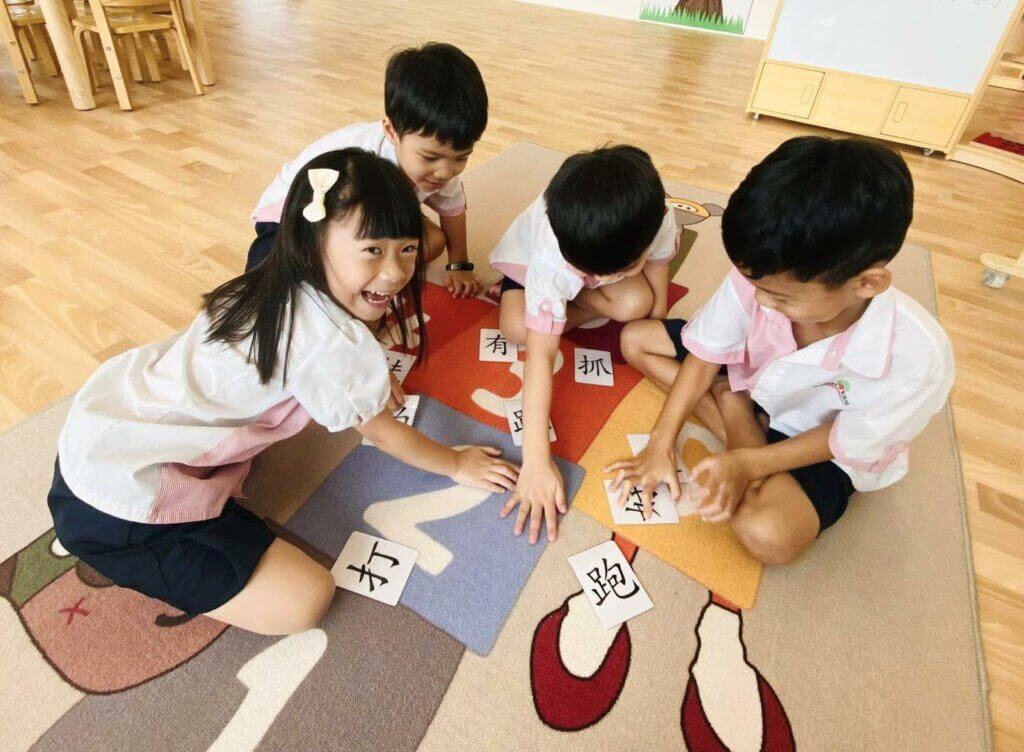
At Raffles Kidz, we believe bilingual education is essential during the early preschool years and our curriculum takes an effective and interactive approach to learning both English and Chinese. Our all-inclusive enrichment classes provide a fun learning experience for children to learn English and Chinese through art, cookery, and speech and drama activities. Not only does it foster a love for learning English and Chinese but also gives children the opportunity to interact with their peers in both languages. This prepares them to become effective bilingual communicators and sets their path towards a smooth transition into primary school.
With the goal of building a strong foundation for our children at Raffles Kidz Singapore, our comprehensive bilingual curriculum caters to the holistic development of the whole child through inquiry-based learning, purposeful play, and a nurturing environment. Find a preschool near you and book a tour today!