Key Takeaways
- Young children thrive when home and school reinforce the same values, routines, and learning expectations.
- Emotional resilience and social confidence grow stronger when caregivers and educators work together.
- Learning becomes more meaningful when families extend classroom experiences into everyday moments at home.
- Open communication and aligned guidance help children feel secure, supported, and empowered to learn independently.
Introduction
A strong parent–school partnership benefits young children by enhancing their academic growth, social development, and emotional well-being through consistent support and communication. This unified approach fosters a stable and nurturing environment where children feel confident and motivated, knowing that both parents and teachers are working together to guide their learning journey.
With meaningful parent–teacher collaboration, children experience continuity between home and school, benefit from richer, tailored learning experiences, and receive timely support when challenges arise. This foundation is especially important in a preschool learning environment, where early experiences shape lifelong attitudes toward learning.
Building a Consistent Learning Environment
A cohesive learning environment helps young children feel grounded, making it easier for them to absorb new knowledge and adjust to daily expectations. This begins with shared values at home and school and continues with learning reinforced across both settings.
Continuity in Values and Routines
When both home and school reinforce similar expectations and teaching methods, children experience smoother transitions throughout the day. A strong parent–teacher partnership enables routines, classroom concepts, and positive behaviours to be reinforced at home. This consistency helps reduce confusion, supports emotional stability, and helps young learners adapt more comfortably to daily expectations.
Stronger Skill Retention
Consistent reinforcement also improves skill retention. When children practise early literacy, numeracy, or self-help skills in more than one setting, their understanding deepens
significantly, which is a key pillar of effective early childhood education support.
Enhancing Social and Emotional Development

A child’s emotional well-being flourishes when the important adults in their life take a united approach, laying the groundwork for stronger resilience and social confidence as they navigate early friendships and challenges.
Better Emotional Resilience
When parents and teachers work closely together, children benefit from consistent responses to their emotional cues. A united parent–teacher partnership helps adults understand what comforts the child most, allowing both home and school to respond in ways that feel familiar and reassuring to the child, even if the specific strategies differ.
Improved Social Confidence
Children feel more secure when they sense harmony between the adults guiding them. This encourages them to interact more positively with peers, try new activities, and express themselves with confidence, which are critical skills during the early years in any nursery or preschool setting.
Encouraging a Love for Learning Beyond the Classroom
When learning continues at home in meaningful, everyday ways, children form deeper connections to what they experience in school, building curiosity and joy through exploration.
Meaningful Connections at Home
With active involvement from parents, learning extends far beyond school hours. An intentional parent–teacher partnership enables families to reinforce classroom themes at home, helping children connect concepts to their daily life, making learning more relatable and memorable. For example, if the class is exploring nature, parents can take a simple family nature walk and talk about plants, insects, or weather patterns, turning everyday moments into meaningful extensions of school learning.
Cultivating Curiosity and Joy
This approach nurtures intrinsic motivation. Families who actively engage in their child’s learning help make education feel natural, enjoyable, and connected to daily life. This mirrors the inquiry-driven experiences often associated with Montessori approaches in Singapore, where exploration and curiosity guide learning.
Strengthening Communication Between Caregivers and Educators

Open communication ensures both teachers and parents understand the child holistically, leading to more accurate guidance and aligned expectations that shape daily learning and behaviour.
Holistic Understanding of Each Child
Regular updates from both home and school ensure teachers gain insights from both the classroom and the child’s home environment. Through a collaborative parent–teacher partnership, educators can adjust learning strategies that appropriately support each child’s preferences, temperament, and learning pace.
Trust and Transparency
Strong, consistent communication gives parents clarity and reassurance about their child’s progress. This level of transparency and open dialogue is something families look for when choosing the best preschool in Singapore, as it allows them to stay informed about key milestones and remain meaningfully involved in their child’s development.
Empowering Children Through a Shared Support Network
Children flourish when support at home aligns with the guidance they receive in school, creating a sense of stability and trust that strengthens their overall development. When both environments work together with shared expectations and understanding, children are more confident in navigating daily routines, relationships, and challenges. This shared support network lays the foundation for positive habits and emotional security as they grow.
Boosting Confidence Through Unity
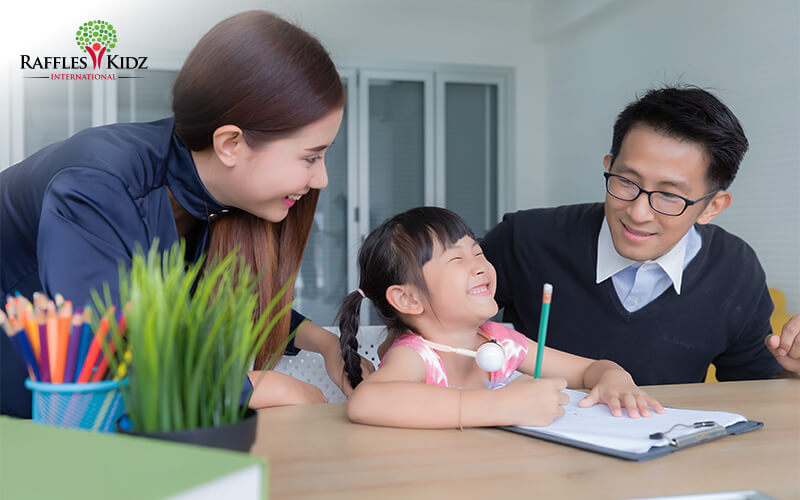
Children thrive when they see parents and teachers working together in unity. A positive parent–teacher partnership reinforces boundaries, consistently celebrates achievements, and assures children that they are supported and understood.
Encouraging Independence and Positive Behaviour
Clear expectations at home and school help children build independence and learn to take ownership of their actions. Clear, consistent guidance, whether for routines, behaviour, or self-help skills, helps them grow into confident, capable learners ready for future growth
Conclusion
A strong, well-aligned home–school partnership is one of the most meaningful foundations a child can have during their early years. When parents and teachers work together, children benefit academically, socially, and emotionally, gaining the confidence and support they need to flourish. At Raffles Kidz International, we are committed to helping children grow into curious, resilient, and lifelong learners. With rave reviews from our parents, get in touch with Raffles Kidz International today to discover more about our partnership-driven approach and enriching learning environment.