Key Takeaways
- Preschool provides young children with a nurturing environment where they can better understand their feelings through supportive guidance, stories, and daily interactions.
- Children feel safe when they have regular routines, and these routines also teach them how to deal with problems, changes, and anger in a calmer and more confident way.
- Group play and shared activities encourage children to develop empathy, cooperation, and stronger social awareness as they interact with peers.
- Support from teachers and collaboration with families create a strong foundation that helps children build independence, resilience, and healthy interpersonal skills.
Introduction
When children struggle with big emotions—such as frustration, anxiety, or difficulty expressing themselves—many parents begin to question whether their child is developing the right emotional foundation.
While some assume emotional growth will happen naturally over time, emotional development in early childhood requires intentional guidance, consistent routines, and meaningful interactions.
Preschool plays a critical role in shaping this development. Beyond academics, it provides children with structured opportunities to understand emotions, build relationships, and respond to challenges.
However, not all preschools support emotional growth in the same way. The quality of the environment, teaching approach, and daily experiences can significantly influence how children develop confidence, empathy, and resilience.
Learning to Identify and Express Emotions
Understanding and Naming Feelings
Young children are still learning how to make sense of their emotions. Through storytelling, guided conversations, and expressive activities, preschool introduces them to emotional vocabulary.
This supports emotional development in early childhood by helping children recognise, label, and better understand feelings such as joy, frustration, or anxiety in real-life situations. As children gain clarity over their emotions, this progress becomes more evident in how they express themselves and interact with others.
Communicating Emotions in Safe, Guided Settings
In a supportive preschool environment, children are encouraged to express their thoughts and feelings confidently. Teachers guide these interactions carefully, helping children communicate respectfully and resolve misunderstandings.
These early experiences strengthen their ability to express themselves, giving children the confidence to communicate clearly both in school and at home.
Developing Emotional Regulation Through Routines
Learning Stability Through Predictable Daily Schedules
Consistent routines provide children with a sense of security and structure. Knowing what to expect helps them feel safe, which is essential for their overall development.
Transitions throughout the day—such as moving between activities—become opportunities for children to practise patience and adaptability, strengthening their ability to manage emotions over time.
At Raffles Kidz, these routines are intentionally designed to help children anticipate transitions, manage emotions, and develop a strong sense of security throughout the day.
Why Emotional Regulation Must Be Taught
Many parents assume children will naturally learn to manage their emotions as they grow older, but in reality, emotional regulation in preschoolers must be intentionally taught and consistently reinforced through daily experiences.
A well-structured preschool environment provides repeated opportunities for children to practise managing frustration, waiting their turn, and responding calmly to challenges. These experiences are key to building resilience, self-control, and long-term confidence.
Building Empathy and Social Awareness
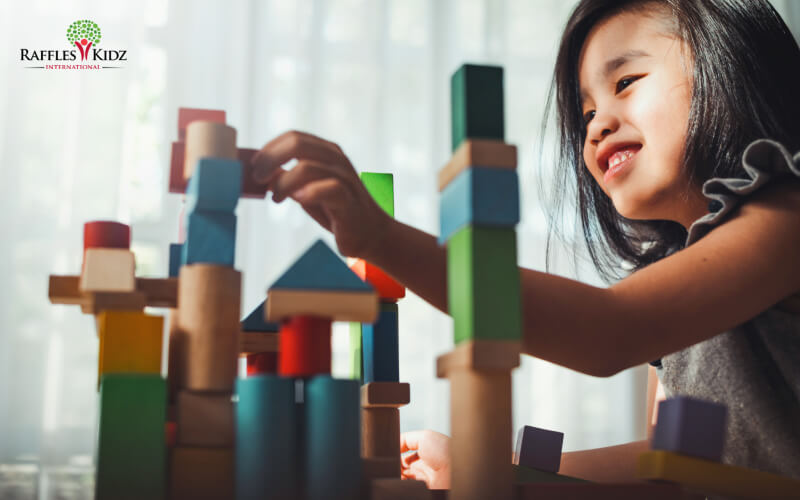
Learning Through Collaborative Play and Shared Spaces
Group activities and shared learning spaces demonstrate clearly how preschool helps social and emotional skills develop through daily interaction.
Children learn to:
- share resources
- take turns
- resolve conflicts
- support peers
These experiences strengthen empathy and cooperation, which are essential for building strong relationships and social confidence over time.
Developing Emotional Understanding in a Community Setting
Emotional Growth in a Bilingual Environment
In a bilingual preschool setting, children engage with different languages and communication styles every day.
At Raffles Kidz, bilingual immersion allows children to express emotions across languages, strengthening both communication and understanding. This further supports their ability to appreciate different perspectives while deepening their emotional awareness and confidence in expressing themselves.
Encouraging Confidence and Independence
Building Self-Belief Through Daily Responsibilities
Simple daily tasks such as managing belongings, making choices, and completing activities help children develop independence.
Each small success reinforces confidence, contributing to steady personal development. Over time, children become more secure in their abilities and more willing to take on new challenges. For many parents, these moments are often the first visible signs of their child’s growing confidence and independence outside the home environment.
Strengthening Resilience Through Exploration and Problem-Solving
Children build resilience through experience. Inquiry-based learning, hands-on exploration, and guided problem-solving create opportunities for children to overcome challenges.
Through these experiences, children learn perseverance, adaptability, and confidence, all of which contribute to strong personal development.
These moments also support their overall development, as children begin to understand that setbacks are a natural part of learning.
Partnering with Teachers to Support Emotional Growth
Consistency Between School and Home
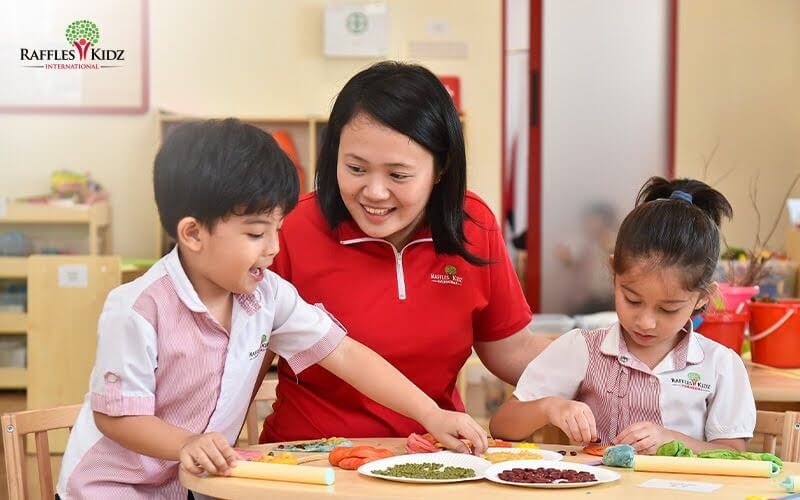
Strong communication between teachers and parents ensures children receive consistent guidance, something many families prioritise when choosing childcare in Singapore.
This consistency reinforces routines and behaviours that help children manage their emotions effectively, allowing them to feel secure across different environments.
Purposeful Activities That Build Emotional Awareness
Preschool programmes incorporate emotional intelligence activities for young children to support a deeper understanding of feelings.
These include:
- storytelling and role play
- guided discussions
- reflective activities
- peer interaction exercises
Such activities are essential in supporting children’s overall development, helping them build empathy, self-control, and social awareness.
Why Emotional Growth Cannot Be Left to Chance
Not all preschool environments support children’s development equally. Some focus primarily on academic outcomes, while others take a more holistic approach. Understanding how social and interpersonal skills develop is key for parents when choosing the right environment.
A preschool that takes an intentional approach will integrate emotional learning into daily routines, teacher interactions, and classroom design, rather than leaving it to chance.
Conclusion
Children with a strong emotional foundation are better equipped to succeed academically, socially, and personally.
At Raffles Kidz International, emotional development is intentionally nurtured through structured routines, bilingual immersion, and meaningful teacher-child interactions. These elements work together to support children’s ability to manage their emotions, build confidence, and strengthen resilience.
With a well-designed curriculum and supportive environment in a preschool setting, children are given the opportunity to develop not only academically but also emotionally, preparing them for future success. These abilities are not something children simply grow into—they must be carefully nurtured from the earliest years.
See how emotional growth is intentionally nurtured in your child’s daily experience. Book a personalised tour to observe how our teachers guide children in building confidence, resilience, and emotional awareness.