
Key Takeaways
- Healthy eating during the preschool years plays a significant role in shaping a child’s ability to think clearly, stay focused, and learn effectively throughout the day.
- Nutrient-rich meals help regulate emotions, reduce irritability, and support positive social interactions, contributing to stronger emotional resilience.
- Early exposure to a variety of wholesome foods establishes lifelong habits, encouraging children to develop curiosity, independence, and a positive relationship with food.
- Strong collaboration between educators and families ensures consistent nutrition practices at home and in school, fostering a supportive environment that promotes overall development.
Introduction
Healthy eating is essential during the preschool years, a period when children experience rapid cognitive and emotional development. This phase is marked by heightened curiosity, growing independence, and expanding social awareness, all of which are influenced by the quality of their daily meals. When preschool nutrition is thoughtfully supported through balanced routines, children benefit from sharper concentration, steadier moods, and greater confidence in learning settings. These early foundations not only prepare them for formal schooling but also shape a lifelong relationship with food and overall well-being.
The Brain–Body Connection in Early Nutrition
The brain undergoes rapid development during early childhood, and its efficient functioning heavily depends on proper nourishment. This makes nutrition in preschool a crucial component in building cognitive readiness and supporting healthy development.
Provides Essential Energy for Brain Activity
A steady supply of wholesome food fuels a child’s brain throughout the day. Complex carbohydrates, proteins, and healthy fats help sustain attention and facilitate smooth transitions between activities, core elements that reinforce the link between nutrition and cognitive development.
Supports Neural Growth and Cognitive Skills
Vitamins and minerals, specifically omega-3 fatty acids, iron, and B vitamins, contribute to memory formation, processing speed, and problem-solving abilities. These developmental benefits complement the hands-on learning and exploratory experiences commonly found in structured early learning environments, where children engage in dynamic, inquiry-based activities.
Supports Cognitive Readiness
Regular nutritional intake helps preschoolers remain focused and receptive, making it easier for them to learn new concepts, engage in hands-on activities, and participate confidently, whether during literacy lessons, creative play, or outdoor exploration.
How a Balanced Diet Shapes Learning and Focus
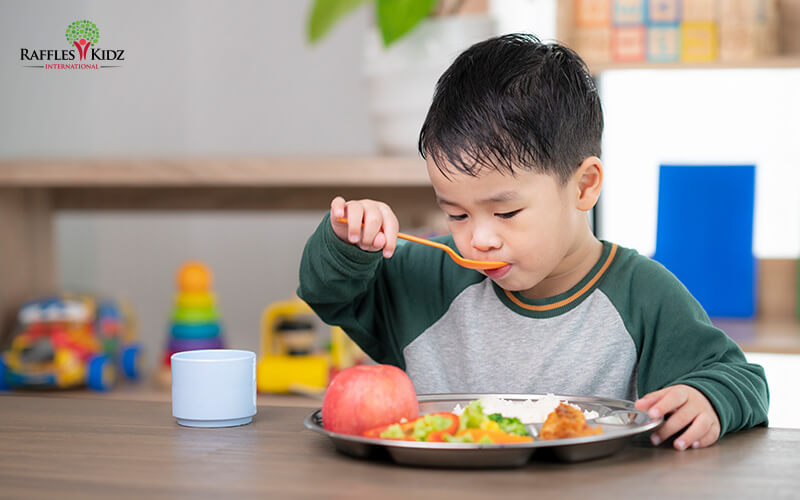
A typical preschool curriculum in Singapore ensures children maintain a balanced diet with nutritious daily meals like breakfast, lunch, and tea break. What children consume directly impacts their ability to concentrate and remain engaged, particularly in dynamic environments that involve movement, exploration, and structured learning.
Stabilises Energy and Supports Focus
Nutritious meals featuring lean proteins, whole grains, fruits, and vegetables help maintain steady blood sugar levels. This prevents the energy dips that can disrupt a child’s attention span, reinforcing why nutrition in preschool plays a central role in daily learning.
Boosts Learning Outcomes
Preschoolers who adhere to a balanced diet for their age are likely to show improvements in memory retention, more consistent participation, and comprehension during both individual and group-based activities.
Enhances Classroom Participation
A well-nourished child is better equipped to stay engaged during lessons, outdoor play, and a range of daily learning activities commonly found in preschool settings.
The Emotional Side of Healthy Eating
Nutrition not only influences how children learn but also influences how they feel, behave, and connect with those around them.
Promotes Emotional Stability
Balanced meals help regulate mood swings, reducing irritability and allowing children to adapt better to daily routines and social interactions.
Encourages Positive Behaviour and Confidence
When children feel physically nourished, they tend to be calmer, more sociable, and open to new experiences, demonstrating how nutrition in preschool supports both emotional well-being and cognitive development.
Supports Healthy Social Interactions
A child who is properly nourished is more likely to share, cooperate, and respond calmly to challenges, laying the groundwork for early emotional resilience.
Building Lifelong Habits Through Everyday Choices
Preschool is a formative period for shaping preferences, and the environment plays a powerful role in promoting healthy choices and food habits.
Introduces Variety and Curiosity
Exposure to new flavours, textures, and colours encourages children to try new foods, supporting healthy eating habits in early childhood that often continue into later years.
Models Positive Behaviours
Educators reinforce good habits by consistently modelling positive behaviours and guiding children through routine daily choices in the classroom.
Makes Mealtimes Meaningful
When mealtimes are enjoyable and predictable, children build positive associations with nutritious foods, making healthy choices feel natural rather than forced.
Partnering with Families to Promote Nutrition Awareness

A key factor parents consider when selecting a childcare centre in Singapore is the meal plan and its nutritional value. A strong, supportive partnership between school and home ensures children receive consistent guidance in forming healthy eating behaviours.
Aligns School and Home Habits
Open conversation allows educators and parents to reinforce similar messages about food choices, creating a cohesive routine for the child.
Provides Guidance Through Balanced Menus
Structured meal plans and nutrition-focused education help parents reinforce healthy habits at home, for example, by offering healthy breakfast options or involving children in simple meal preparation.
Creates a Consistent Wellness Culture
When both teachers and families promote the value of food, children develop a clearer understanding of how food affects their bodies, feelings, and learning.
Conclusion
By prioritising nutrition in preschool settings, children gain the cognitive strength, emotional balance, and physical well-being they need to thrive. At Raffles Kidz International, this commitment is demonstrated through well-balanced meals, carefully planned and prepared by our in-house chefs, who have undergone a basic food handling and hygiene course. We also rotate our menu every quarter, and all the menus follow the Healthy Meals in Preschools Programme (HMPP) guidelines to ensure meals are nutritious, balanced, and varied.
Parents usually receive the menu in advance as we work closely with them to manage any dietary restrictions, ensuring a smooth transition into preschool. With strong home-school partnerships and thoughtful nutritional guidance, every child is empowered to grow with confidence, curiosity, and resilience.
Discover how Raffles Kidz International supports holistic development in every child. Schedule a visit today and explore our safe and nurturing environment, holistic bilingual curriculum, and how we shape every child to become a confident lifelong learner.