There are many factors that can affect a child’s learning experience and achieving optimal learning outcomes for young children can be tricky. It requires meticulous care and consideration while relying heavily on factors like caregivers, teachers, and their peers. However, one of the most significant considerations is their learning environment.
A child’s environment, especially in the preschool years, plays a significant role in their development. A good learning environment needs to instil a sense of safety and security in its inhabitants. It should feel structured and nurturing to counteract the confusion they may feel at being placed in a brand-new setting for an extended period of time. A nurturing environment must be clean and organised so children can take comfort in it. In contrast, a messy environment can be both confusing and scary to them.
The impact of a conducive learning environment cannot be understated. Here is how a nurturing environment can facilitate your child’s learning:
1. Provides Structure and Stability
A nurturing environment that meets children’s needs is a safe and open space for exploration. One of the ways to create this environment is by providing a routine which your child can follow; this allows for the structure and stability that children need.
Once the children have been immersed in their new environment well enough, they will be ready for the inclusion of any new elements. At this point, these new features will generate curiosity and a desire to learn.
2. Creates Learning Opportunities
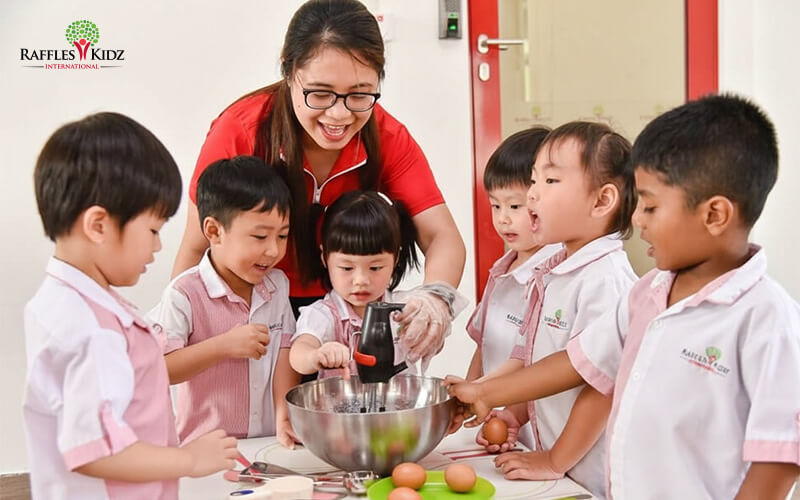
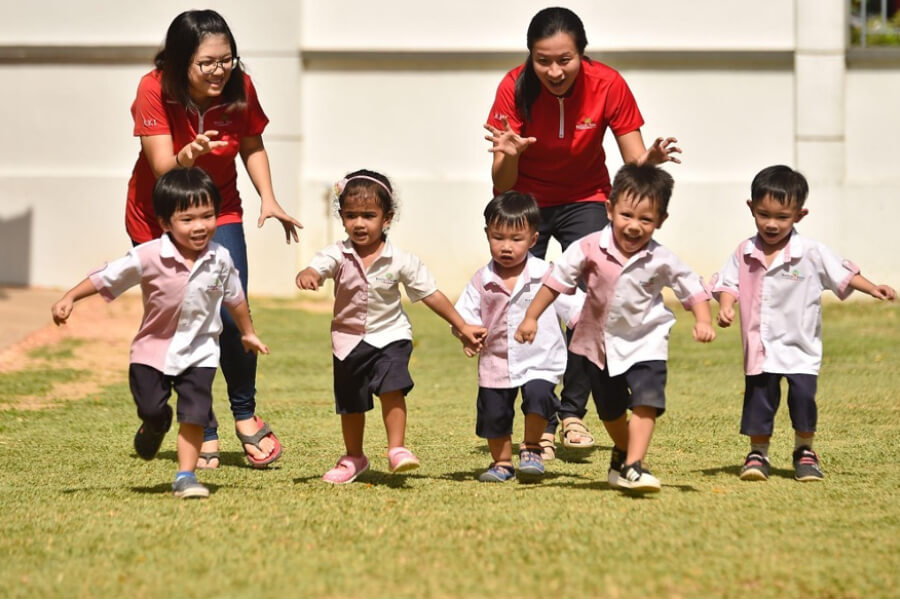
A nurturing learning environment is often layered with different levels of stimulation, impacting children differently. This exposes children to more opportunities for learning. A varied learning environment is optimal when stimulating learning opportunities in children. For example, outdoor spaces provide children with an open space for creative play and encourage children to discover nature while playing, whereas indoor spaces are suitable for quiet activities such as reading and drawing. Different settings should engage different senses in stimulating different responses and urge the children to think deeper and more creatively. A diverse set of items for play with various textures, scents, and sights are preferable as it encourages the use of their imagination.
3. Fosters Independence in Children
Children in a nurturing learning environment feel more supported and tend to be able to express themselves better. They are also more willing to step out of their comfort zone and explore what interests them, thus fostering a spirit of curiosity and independence.
4. Encourages Social Interactions
Another important consideration is how the environment affects social interactions. Does it encourage or hinder it? The best preschools in Singapore incorporate wider, open areas, collaborative endeavours, and other intriguing elements to heighten this. The learning environment parents and teachers create supports the development of social and emotional skills by introducing activities that encourage social interactions. For instance, sensory play and group-based learning activities can help children gain new insights from their peers and boost their social skills.
Conclusion
The purpose of a nurturing learning environment is not merely to support education, but also to produce interactive experiences that are crucial to early learning. At Raffles Kidz, we aim to provide the best learning environment with quality infrastructure, ample indoor and outdoor spaces, and purposefully-designed classrooms. This way, students can make the most of our award-winning curriculum and gain invaluable lessons along the way. Want to hear more? Book a tour with us today!